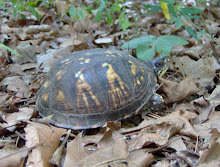
In addition to this blog, I am writing for the Examiner, as the Atlanta Animal Welfare Examiner. I will be covering animal welfare issues in the Atlanta metro area and Georgia in general from a No Kill perspective. I will also announce local animal welfare-related events and feature one or more adoptable pet per week, and write about a few herp-related issues. Have a story idea, event or pet you'd like to see featured? Send me an email. Check out my articles at:
http://www.examiner.com/x-35783-Atlanta-Animal-Welfare-Examiner
To receive email alerts when I publish a new article, click on the 'subscribe' button at the top of the page.
Showing posts with label No Kill. Show all posts
Showing posts with label No Kill. Show all posts
Sunday, January 24, 2010


Friday, December 18, 2009
Belated Mini-Review of Balcombe's Pleasurable Kingdom and thoughts onNo Kill--Part 1

Jonathan Balcombe published Pleasurable Kingdom: Animals and the Nature of Feeling Good back in 2006, but I only just got around to reading it. Clifford bought it for me. I have to admit to experiencing mixed feelings upon first holding this book in my hands, and not because of what Balcombe wrote--I recommend this book highly to any animal-lover, armchair natural-historian or biologist--no, my trepidation and annoyance was due to the presence of a forward by Peter Singer, author of Animal Liberation, and apparently mentor to Ingrid Newkirk, founder and president of PETA, and a puff by Wayne Pacelle of HSUS. I had to wonder at Balcombe's taste.
I began by reading the foreward. Singer begins with an anecdote about dolphins surfing (not suffering), and goes on to say, "Despite such experiences--and growing up with a cat who certainly showed she liked being stroked--my focus has always been on animals' capacity to suffer, from the time I started thinking seriously about the ethics of how we treat them." He goes on to say, "But with all this emphasis on animal suffering, I and many others in the animal movement have neglected animals' capacity to enjoy their lives. Fortunately Jonathan Balcombe's book has restored the balance." I think that this book is excellent, thought-provoking, informative and an enjoyable read. I do not think that it has magically restored balance to the animal movement, and I offer as evidence the continued opposition to the No Kill movement of groups such as PETA and HSUS and of their respective leaders in particular.
Singer is clearly primarily interested in animals raised for food and for laboratory research. He does not mention the millions killed in shelters each year. I really wish that he had. He wrote about his cat. Pets are the animals whose capacity to enjoy life is most readily experienced , observed and shared by most people. Do Singer and others regard the tragic killing of millions of shelter pets as mere 'collateral damage' in their greater quest for a more perfect world? Most people with pets don't need to read a book to know that their dog or cat has the capacity to experience pleasure and the ability to seek it out. American 'shelters' deprive millions of animals of these things annually, and for no other reasons than laziness and adherence to entrenched and regressive views. The majority of these animals are not inevitably or irretrievably suffering. They're jsut homeless. They have the capacity to enjoy life. Singer could have said something about this. He maybe almost did. But he didn't. I'm disappointed in that, but he indicated a little chink in the old Benthamite armor. Suffering isn't the only thing. There is a whole 'nother facet to the lives of animals--pleasure. Hallellujah for that.
Balcombe begins the book with an exploration of how animals' capacity to experience pleasure is adaptive in the Darwinian sense, and how it is changing how we view animal minds and how animals are portrayed in the media.
For now, I'll leave you with a quote from the book:
"The mass media often perpetuate the stereotype that life is harsh and joyless for wild creatures. An article on Norwegian polar bears poisoned by toxic pollutants 'migrating' from industrial regions in the south describes the 'brutal, unforgiving' surroundings. 'From the moment of birth--even conception--animals here struggle against the odds. Most polar bears die before their first birthday.' It is sad that not all polar bears grow into adults, and a shame that humans are making things worse. And yet, a six month old polar bear has been suckled and nurtured by a protective mother, has experienced over 100 sunrises and sunsets, and probably hasn't bemoaned the transience of life. Most lives, even shortened ones, are probably better lived than not lived at all."
George, the dog in the picture above, is experiencing the pleasure of being alive. A few months ago, he was a skinny little guy on death row at a high-kill shelter in Georgia. He is part of the fortunate minority from that shelter. Most end up as rotting corpses in the county landfill, and that is unacceptable. He was lucky, but luck should have nothing to do with it.
Wednesday, November 18, 2009
Dead Pit Bull Neuters Ed Sayres!

I'm pretty sick and tired of the lurid headlines about 'pit bulls' (many of which are about dogs that are not in fact 'pit bulls'), but this is one I'd actually like to see.
The picture at left is from the Facebook page of No Kill Now. It shows the abused pit bull Oreo just a few minutes before her execution. Her executioners were none other than the ASPCA, headed up by Ed Sayres.
Like many people, I don't see an irredeemably aggressive dog in this picture. Or this one. Or for that matter, this one. Nor do I see anyone wearing body armor. All the people in these pictures look pretty darned defenseless. Were they or the photographers in any danger? I doubt it.
I look at that expressive face and I see a dog uncertain about her future. She's been through a lot in her short life, thrown six stories and survived. The time leading up to that event had to be confusing, and undoubtedly psychologically painful. What kept her going? I think of her as a puppy, loved and cared for by her mother. In these pictures, she still has a puppy's face. She looks like she's wondering what will happen next.
These bipedal ones, you have to watch them, you never know what they will do next. They're unpredictable.
She has an open, inquisitive face, the face of an intelligent and soulful animal whose innate tendency is towards joy. She still has that face in these pictures, despite what she's been through--her mother's love, the warmth of her littermates, the carefree play of puppies, the terrifying rage of her 'owner', the incomprehensible hell of being pitched off of a roof, the moments in midair, the incredible pain of hitting pavement, the crunch of breaking bones, the awful cry she made upon impact, a sound so awful that you feel it in your bones, the people crowding around her, the ride in the back of a van, the veterinarian, anesthesia and surgery, waking up, her front legs in casts, her broken rib pinned, the kennel, the way sound reverberates off of the hard surfaces, the smells, the people. Always people, lots of them. They come and they go. They mutter things in a language she doesn't understand. Can she trust any of them? Hitting the ground after being launched into midair with rocket fuel of rage knocked the wind out of her. It knocked out some innocence too. She's wise to these shifty primates, that makes it hard for her to trust again, even though she wants to. She must choose wisely. Choosing poorly would be too much.
She's a terrier, she's nobody's fool. She knows that trust, once blasted away, has to be earned back. Some things can be accomplished on a tightly prescribed schedule, but working through trauma is not one of them. That takes time. It takes patience. And it takes trustworthiness. Dogs can smell b.s.
The ASPCA is wealthy. It is evidently not patient. It is not trustworthy. An organization's actions and persona reflect that of its leadership. Ed Sayres makes half a million dollars a year as the head of the ASPCA. He is evidently neither patient nor trustworthy. I must also conclude that he lacks empathy for people and animals, and therefore has no business heading an organization whose stated mission is to protect animals, a mission that is fundamentally based on empathy and the human-animal bond. There was no excuse for killing Oreo in the face of a qualified sanctuary ready and willing to take her. Where a true leader in the humane movement would have shown empathy, humility and cooperation, he had nothing to offer but spitefulness and self-serving tripe.
Subscribe to:
Posts (Atom)


 Posts
Posts